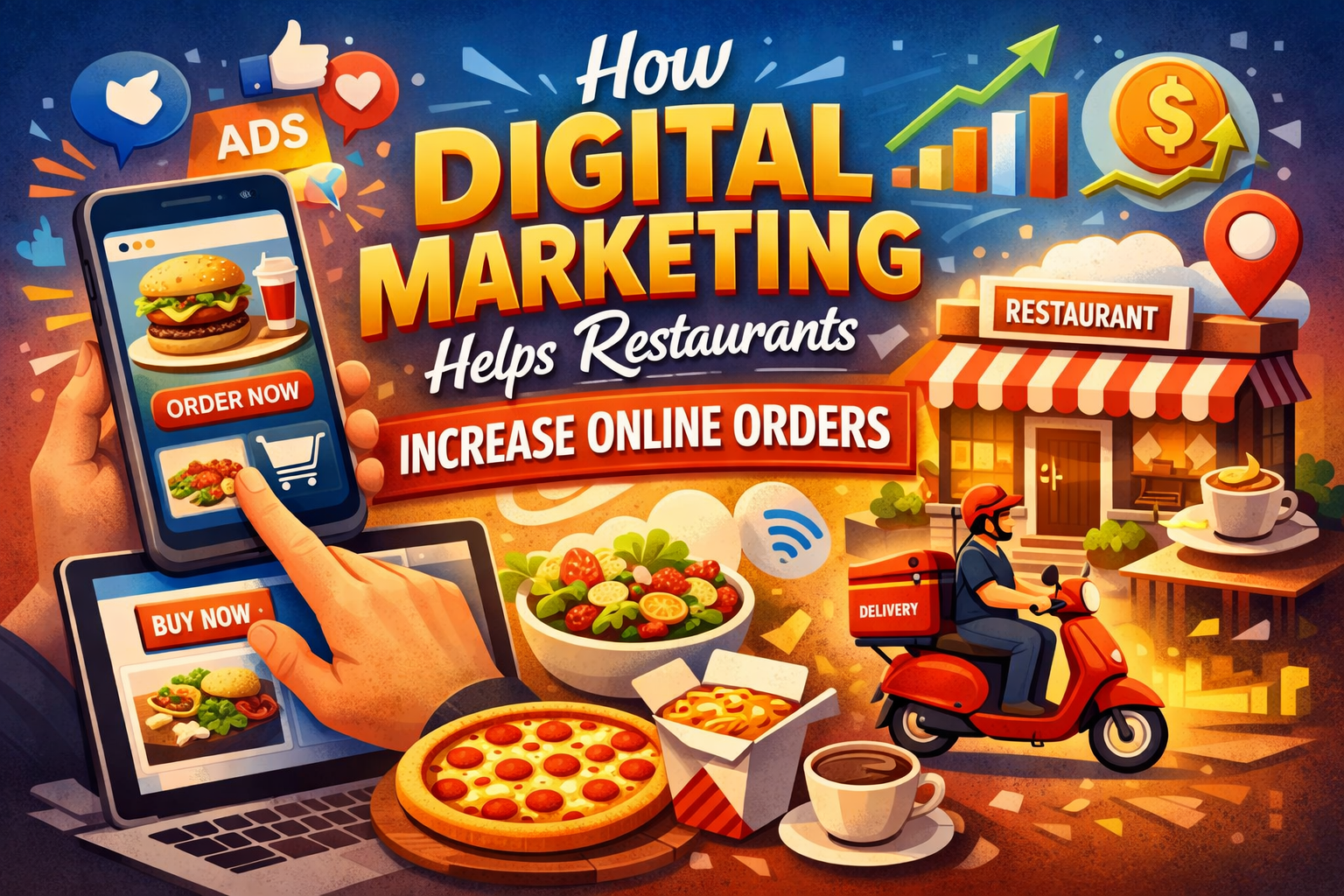
The old way of running a restaurant was simple. You picked a high-traffic corner, put out a sign, and hoped the smell of the kitchen did the rest. That model is broken. Today, the “high-traffic corner” is a 6-inch screen. If a customer can’t find you, vet you, and order from you within three minutes of feeling a hunger pang, you don’t exist to them.
The shift to digital isn’t just a trend. It’s a survival requirement. Most owners think having a website is enough. It isn’t. A website without a strategy is just a digital billboard in a desert. To actually increase online orders, you need to understand the mechanics of how people decide what to eat.
The Friction Problem
People abandon online orders for two reasons: technical friction or a lack of trust. If your menu is a PDF that requires zooming and scrolling, you’ve failed. If your checkout requires an eight-step registration process, the customer is going to close the tab and open an aggregator app instead.
Effective digital marketing for restaurants starts with removing these barriers. It’s about making the path from “I’m hungry” to “Order Confirmed” as short as possible.
Why Search Visibility is the New Real Estate?
When someone searches for “best sushi near me,” Google isn’t looking for the best fish. It’s looking for the most relevant data. Local SEO is the engine behind online orders. If your Google Business Profile isn’t optimized with high-res photos, current hours, and a direct “Order Now” link, you are handing money to your competitors.
Many businesses find that partnering with a Digital Marketing Agency in India provides the technical depth needed to handle these granular SEO tasks without the overhead of a local firm. The logic is simple: global expertise, local application.
The Real Cost of Aggregators vs. Direct Orders
Third-party apps like Zomato or UberEats are great for discovery but terrible for margins. They take 20-30%. If you aren’t using digital marketing to migrate those users to your own platform, you’re just renting your customers.
| Metric | Third-Party Apps | Direct Ordering System |
| Commission Fees | 20% – 35% | 0% – 5% (Platform fee) |
| Customer Data Access | Restricted | Full Ownership |
| Brand Loyalty | Loyal to the App | Loyal to the Restaurant |
| Control Over Promos | Limited | Total |
| Profit Margin | Low | High |
Strategic Content and Visual Trust
Food is a visual product. On social media, you aren’t selling ingredients; you’re selling a craving. Short-form videos, like 10-second clips of a steak being sliced or a cocktail being poured, generate 4 times more engagement than static images.
However, content without a “Buy” button is just entertainment. Every post must have a clear call to action. This is where digital marketing for restaurants often falls short. Beautiful photos are useless if the link in the bio leads to a broken homepage.
Hotel properties struggle when they treat the lobby and the kitchen as separate entities. A guest checks in and immediately searches Google for a place to eat. That is a marketing failure. Effective digital marketing services for hotels solves this by integrating the guest profile. You use the room confirmation to secure the dinner reservation. If the guest is searching outside your ecosystem for their next meal, you are losing the most profitable part of their stay.
Paid Ads: The “Instant” Traffic Lever
Organic growth takes time. If you need orders tonight, you use paid ads. Hyper-local targeting allows you to show ads only to people within a 3-km radius of your kitchen during peak lunch or dinner hours.
- Google Search Ads: Target high-intent keywords like “pizza delivery.”
- Instagram/Facebook Ads: Use “Interest-based” targeting for foodies and office workers.
- Retargeting: Show ads to people who put items in their cart but didn’t finish the order.
Effective execution usually requires professional oversight. A Digital Marketing Agency in India can manage these campaigns with a focus on ROI, ensuring your ad spend doesn’t evaporate into low-quality clicks.
The Hospitality Overlap
Dining and lodging aren’t separate silos anymore. A guest doesn’t distinguish between the room they sleep in and the restaurant downstairs. If the booking site is sleek but the room service menu is a grainy photo on a third-party site, you’ve lost them. High-margin F&B revenue is too important to leave to chance. This is where digital marketing services for hotels need to get aggressive.
A weak digital presence at the bar or bistro drags down the entire property’s reputation. Consistency matters. From the first search to the breakfast table, the experience must be unified. Integrated digital marketing for restaurants isn’t an add-on; it’s the anchor for the larger hotel strategy.
Leveraging Data for Repeat Business
Data is the most undervalued asset in a restaurant. If you know a customer orders a Pepperoni pizza every Friday, you shouldn’t be sending them a coupon for a salad on Tuesday.
- Email Marketing: Not for newsletters, but for personalized offers.
- SMS Marketing: High open rates (98%) for “Happy Hour” or “Rainy Day” specials.
- Loyalty Programs: Give them a reason to come back to your site, not the app.
To stay competitive, many brands rely on a Digital Marketing Agency in India to automate these workflows. Automation ensures that the marketing happens even when the kitchen is slammed.
Why Specialized Services Matter?
You wouldn’t hire a plumber to fix your oven. The same applies to marketing. Standard agencies don’t understand the “now” nature of the food industry. Using dedicated digital marketing services for hotels or restaurants ensures the strategy accounts for perishability, kitchen capacity, and peak hours.
The goal of digital marketing for restaurants isn’t just “likes.” It’s a full kitchen and a busy delivery tablet. It’s about building a system that works while you’re busy cooking.
Conclusion
An ordering portal is just a tool, not a strategy. Most owners build the site and wait for results that never arrive because they ignore the psychology of a hungry customer. OptMum Digital bridges the gap between a search query and a completed sale. We manage the technical friction that kills conversions. If your online presence does not translate directly into kitchen tickets, it is an overhead cost rather than an asset.
Frequently asked question
Q1. How long until I see more orders?
Ans. Paid ads drive traffic immediately. Organic SEO takes months. It is a marathon, not a quick fix.
Q2. Should I ditch third-party delivery apps?
Ans. No. Use apps to find new customers. Use your own site to keep them. Stop paying 30% commissions on regulars who already know your brand.
Q3. Why do my social posts get likes but no orders?
Ans. Content without a direct path to purchase is just noise. Digital marketing for restaurants fails when the ordering process is hidden or difficult on mobile.
Q4. Why use an offshore agency?
Ans. Hiring a Digital Marketing Agency in India provides technical scale. You get expert monitoring and data analysis without the high cost of local boutique firms.
Q5. How do I market a restaurant inside a hotel?
Ans. Dining and lodging are linked. Dedicated digital marketing services for hotels ensure the kitchen stays busy throughout the guest’s stay by targeting travelers before they arrive.