Every week, we talk to business owners who feel completely stuck on a relentless marketing treadmill. You want more qualified leads today, but you also want a sustainable brand that survives five years from now without costing you a fortune in monthly ad spend. It brings up the classic debate: SEO vs PPC. Do you pump immediate cash into paid traffic to get fast results, or do you wait out the slow burn of building an organic reputation?
There is no single answer here. Choosing the wrong priority wastes your budget and kills your growth momentum. We constantly see companies burn thousands on short-term fixes while completely neglecting their organic foundation. Conversely, others wait months for organic traffic to kick in while their sales team sits idle, waiting for the phone to ring.
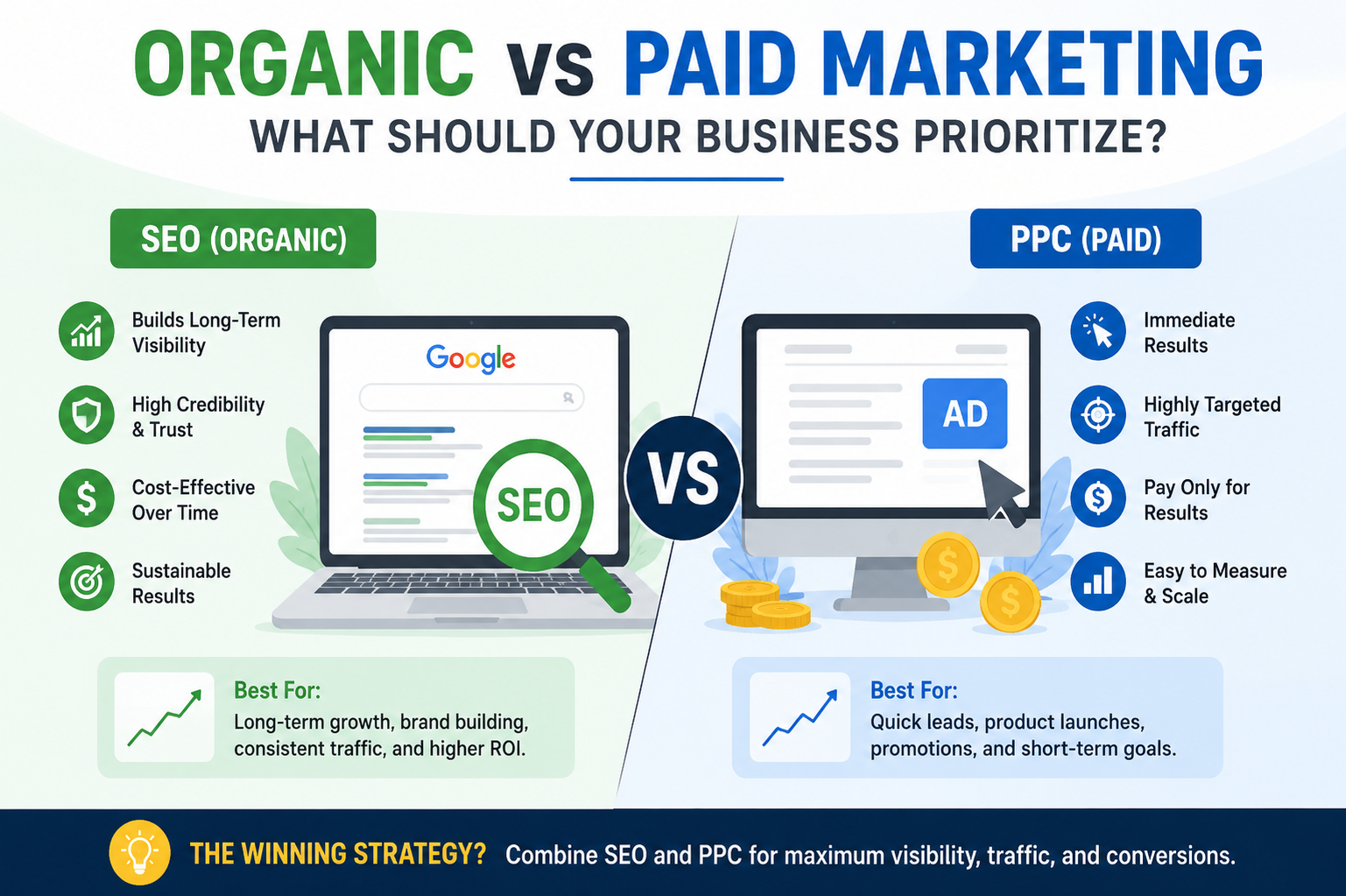
Let’s look at the fast lane first: paid marketing. If you need sales tomorrow morning, paid channels give you immediate visibility. The second we launch targeted Google Ads campaigns for our clients, high-intent traffic hits their website. You target people who are actively holding their credit cards, looking for the exact services or products you sell.
Paid traffic gives you total control over your pipeline. You decide exactly how much money to invest each day, which geographical locations to target, and what specific search terms you want to own. It offers a transparent view of your marketing ROI because you can track every single dollar from the initial click to the final checkout page. You know exactly what it costs to acquire a customer.
The downside is simple. The moment you turn off the budget, traffic stops. It is digital rent. You do not own the real estate; you just pay for temporary space on a search engine results page. If ad costs rise in your industry due to sudden competition, your profit margins shrink overnight.
Organic marketing builds equity. When we execute content marketing for your brand, we create useful pages that pull in buyers long after the publication date. One detailed breakdown of a major industry problem can generate qualified leads for years. Zero ad spend required. Potential clients trust these natural listings more than sponsored ads. They know you bought the ad, but you earned the organic spot.
The problem is speed. This is the main friction point in the SEO vs PPC choice. If you need immediate sales to cover payroll next week, relying purely on organic traffic will break your cash flow. You cannot pay your team with search impressions that might show up next quarter.
So, what should your business actually prioritize today? The answer depends entirely on your current cash flow, your timeline, and your ultimate revenue goals.
We rarely tell clients to pick just one side. Splitting your budget down the middle without a clear plan ruins your marketing ROI. Instead, we run a combined strategy that settles the SEO vs PPC debate by using both tools where they actually work best.
Here is how we break it down based on where your business stands today:
- New launches or new products: You need data and cash immediately. We deploy Google Ads right away. This validation stage tells us if people actually buy what you sell, long before you invest months into building a search presence.
- Established brands looking for stability: You cannot keep paying rising ad costs forever. We build out a heavy content marketing engine here to stabilize your traffic and systematically lower your customer acquisition costs over the long term.
- Crowded markets: You have to play both fields. You run ads on high-intent buyer terms where competitors are bidding, while simultaneously winning the educational keywords through organic search.
This creates a direct data loop that saves thousands of dollars. Most companies guess what their audience cares about when starting out. We don’t. The search term reports from your active Google Ads show us the exact phrases people type right before they buy.
We take those high-converting terms and feed them straight into your content marketing strategy. You get articles and landing pages that you already know will convert because the paid data proved it first. It directly improves your overall marketing ROI because you stop spending money on blind guesswork.
At the same time, having a strong organic presence improves your paid performance. When someone clicks your ad, they often look around your site or check your blog to see if you actually know what you are talking about. If they find helpful, high-value information, they are far more likely to buy from you. This cross-channel support directly improves your overall marketing ROI.
Managing both tracks simultaneously gets messy fast. You easily lose thousands of dollars on broad match keywords in Google Ads because you missed a daily optimization window. Or your content production stalls entirely while you tweak ad copy. Most lean teams simply lack the hours to audit accounts, write content, and track conversions properly.
We fix this imbalance. Our team looks at your actual numbers and builds a direct strategy based on your current cash flow. No pre-packaged templates. We focus entirely on making your marketing budget profitable.
Let’s look at your current marketing setup. Send us a quick note today, and we will audit your active campaigns to show you exactly where you are dropping qualified leads.