
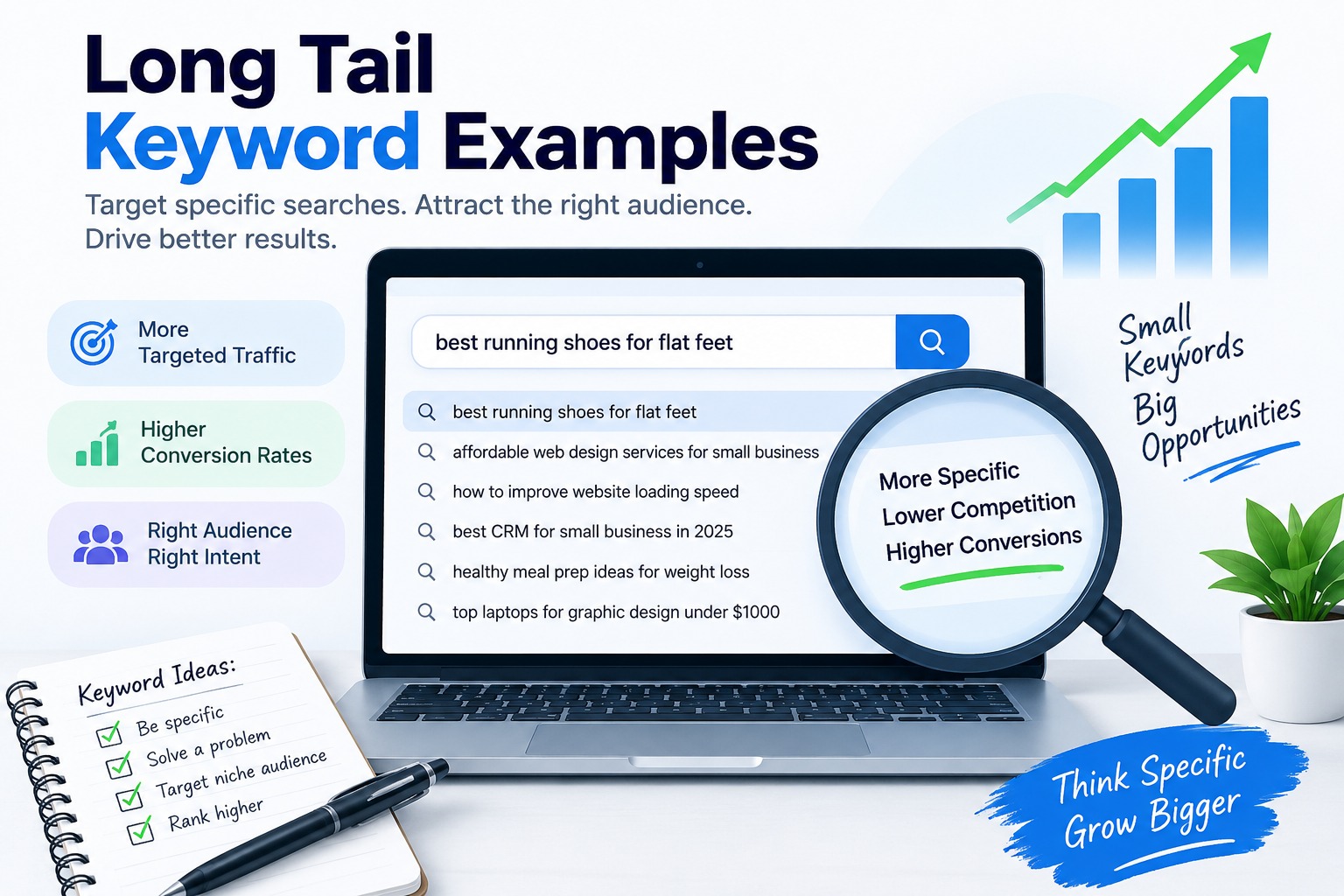
SEO has changed significantly as search engines have become better at understanding context, intent, and natural language. Ranking is no longer simply about finding a popular keyword and repeating it throughout a page. Businesses increasingly need to understand what people are actually searching for and create content that answers those specific needs.
This is where long-tail keywords become valuable. These longer and more specific search phrases can help websites attract highly relevant visitors, compete in less crowded search results, and turn organic traffic into meaningful actions. Understanding the importance of long-tail keywords can therefore give businesses a practical way to build sustainable search visibility.
What Are Long-Tail Keywords?
Long-tail keywords are specific search queries that typically contain several words and target a narrower search intent than broad keywords.
For example, “running shoes” is a broad keyword, while “best running shoes for beginners with flat feet” is much more specific. The first search could come from someone researching, comparing, or simply browsing. The second indicates a clearer need and provides more information about what the searcher wants.
Long-tail keywords do not necessarily need to contain a particular number of words. Their defining characteristic is their specificity and intent. They often address a particular question, problem, product, audience, or situation.
Why Use Long-Tail Keywords for SEO?
One of the biggest reasons businesses focus on long-tail terms is that broad keywords can be extremely competitive. Established websites may already dominate those search results, making it difficult for smaller or newer sites to gain visibility.
Long-tail searches usually have a narrower audience, but that audience can be more qualified. Someone searching for a specific solution has often moved further along the decision-making process.
For example, a user searching for “CRM software” may still be exploring options. Someone searching for “CRM software for a small real estate agency” has already identified a specific requirement. Creating content around that search can bring a more relevant visitor to the website.
Importance of Long-Tail Keywords in Modern SEO
The importance of long-tail keywords goes beyond lower competition. They help businesses align their content with search intent.
Search engines aim to provide users with useful answers rather than pages that simply contain an exact keyword repeatedly. Specific queries give content creators more context about what information should be included.
Long-tail terms can also help websites build topical depth. Instead of creating one generic page targeting a broad subject, a website can publish useful resources addressing different questions and use cases within that subject.
Over time, these related pages can create a stronger content ecosystem and help search engines understand the website’s expertise.
Benefits of Long-Tail Keywords
There are several important benefits of long-tail keywords that make them useful for both established and growing websites.
1. Lower Competition
Specific phrases generally have fewer websites competing directly for the same query. This can create ranking opportunities that are difficult to find with highly competitive head terms.
2. More Targeted Traffic
Long-tail searches tend to describe a clearer need. When a page matches that need closely, visitors are more likely to find the content useful.
3. Stronger Conversion Potential
Specific searches can indicate stronger purchase or decision-making intent. A visitor searching for a particular product, service, or solution may be closer to taking action than someone conducting a broad informational search.
4. Better Search Intent Alignment
Long-tail phrases often reveal exactly what the user wants to know. This makes it easier to create content that directly addresses the searcher’s question.
5. Opportunities for Smaller Websites
A website does not always need massive authority to target specific, relevant queries. A well-researched and genuinely useful page can compete for narrower searches.
Long Tail Keywords Examples Across Different Industries
Looking at practical long tail keywords examples makes their value easier to understand.
An SEO agency might target “SEO services for local restaurants” rather than only “SEO services.” An online clothing store could focus on “women’s cotton jackets for winter travel.” A software company might target “project management software for remote marketing teams.”
A local service provider could use phrases such as “emergency plumber for leaking water heater,” while an educational website might target “how to prepare for an online MBA interview.”
Each query targets a particular audience and situation. The narrower focus can make the resulting content more useful and commercially relevant.
Long-Tail Keyword Research: Finding Valuable Opportunities
Effective long-tail keyword research starts with understanding your audience. Think about the questions customers ask, the problems they face, and the words they use when describing those problems.
Start with a broad topic and expand it into specific questions and use cases. Search engine autocomplete suggestions, related searches, “People Also Ask” results, customer reviews, forums, competitor content, and keyword research platforms can all reveal useful ideas.
Do not evaluate keywords based only on search volume. A keyword with modest volume can still be valuable if it attracts visitors who are highly relevant to your business.
Consider four factors: relevance, search intent, competition, and business value.
How to Find Long-Tail Keywords
If you’re wondering how to find long tail keywords, begin by examining the searches your existing audience already makes.
Google Search Console can reveal queries that are generating impressions for your website. These can uncover variations that you may not have intentionally targeted.
You can also type a broad topic into Google and examine autocomplete suggestions, related searches, and question-based results. Competitor pages are another useful source of ideas. Look for subtopics they cover and questions they answer that could be explored more thoroughly on your own website.
Customer support conversations and sales calls can be especially valuable because they contain the exact language real customers use.
Building a Long-Tail Keyword Strategy
A successful long-tail keyword strategy should not mean creating a separate page for every possible keyword variation. Instead, group closely related queries according to topic and intent.
Start with your main topics, identify specific questions and use cases, and then determine whether one comprehensive page can satisfy several closely related searches.
For example, a guide about choosing accounting software for freelancers could naturally address related searches involving pricing, features, invoicing, integrations, and ease of use. This approach creates useful content without producing dozens of thin pages.
Long-Tail Keywords SEO Strategy: Best Practices
A strong long-tail keywords SEO strategy focuses on usefulness rather than keyword density.
Include the primary phrase where it makes sense, such as the title, introduction, headings, or body copy. Use related terms naturally throughout the article and answer the underlying question comprehensively.
Internal linking is also important. Connect long-tail pages to relevant service pages, category pages, and broader informational resources. This helps users discover related content and creates clearer relationships between pages.
Most importantly, avoid forcing exact-match phrases into sentences where they sound unnatural. Search engines understand variations and context, while readers quickly notice awkward keyword stuffing.
How to Use Long-Tail Keywords in Content
Knowing how to use long-tail keywords is just as important as finding them.
Use specific terms to guide the purpose of a page rather than treating them as phrases that must be repeated. A long-tail keyword can inspire an article, FAQ, product description, service page, comparison, or tutorial.
Consider the user’s intent before writing. If the query is informational, provide a detailed explanation. If it is commercial, include comparisons, benefits, pricing considerations, or buying guidance. If it is transactional, make the relevant product or service easy to access.
This approach makes keyword optimization part of the content strategy instead of an afterthought.
Common Long-Tail Keyword Mistakes
One common mistake is choosing keywords solely because they have low competition. A low-competition phrase is not useful if it has no connection to your audience or business.
Another mistake is creating separate pages for every tiny keyword variation. When several searches have the same intent, combining them into one strong resource is often more effective.
Keyword stuffing should also be avoided. Repeating a phrase excessively can make content difficult to read and does not automatically improve rankings.
Conclusion
Long-tail keywords offer a practical way to build targeted organic visibility without relying entirely on highly competitive search terms. Their specificity can help businesses understand user intent, create more relevant content, attract qualified visitors, and uncover ranking opportunities.
The best approach is to combine thoughtful research with genuinely useful content. Rather than chasing every possible phrase, focus on the questions and problems your audience actually cares about. When long-tail keywords are integrated naturally into a broader SEO strategy, they can contribute to stronger rankings, better engagement, and sustainable organic growth.
FAQs
1. What are long-tail keywords?
Long-tail keywords are specific search phrases that usually contain multiple words and target a narrower search intent than broad keywords.
2. Why are long-tail keywords important for SEO?
They can help websites target specific search intent, face less competition, attract more relevant visitors, and discover ranking opportunities that broad keywords may not provide.
3. Do long-tail keywords have low search volume?
Many long-tail keywords have lower individual search volumes than broad terms. However, thousands of specific searches collectively can generate significant organic traffic.
4. Do long-tail keywords convert better?
They can have stronger conversion potential because specific searches often indicate that users have a clearer need or buying intention.
5. How can I find long-tail keywords?
Use Google autocomplete, related searches, People Also Ask results, Search Console, competitor research, keyword research tools, customer questions, and online communities to identify relevant phrases.